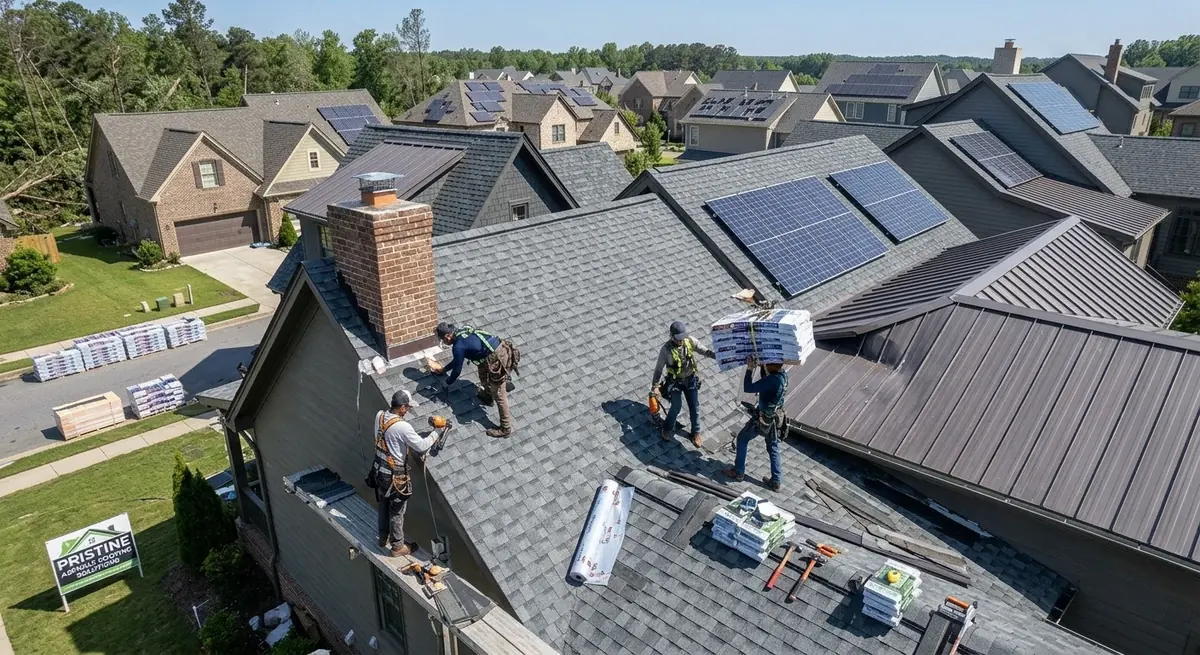
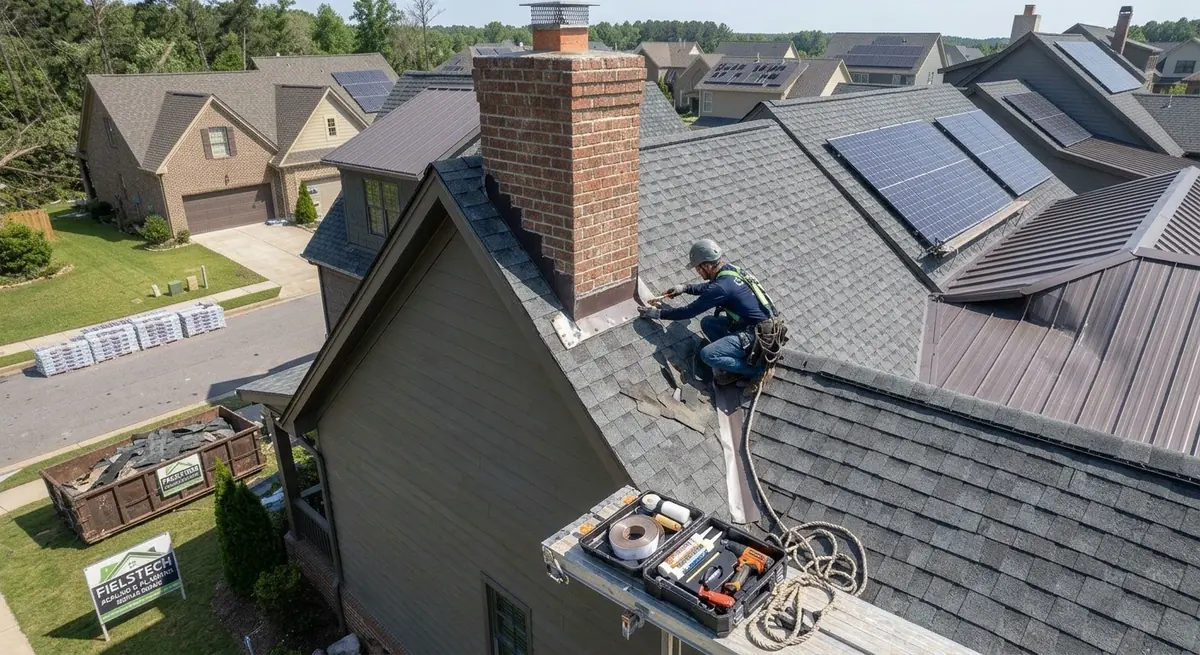
The loblolly pines of the Lost Pines are one of the best things about living in and around Bastrop. They are also one of the hardest things on a roof. Needles fall year-round, cones roll into valleys, and limbs reach over rooflines. Left alone, that debris can trap moisture, clog gutters, and shorten the life of your roof.
The good news is that a little regular attention goes a long way. Here is what pine needles on roof surfaces actually do, where problems start, and a practical maintenance plan for wooded lots in Tahitian Village, along the Colorado River, and throughout the Lost Pines.
Why Pine Debris Is Hard on Roofs
A light scattering of needles is not a big deal. Trouble starts when they build up into mats. Those mats:
- Hold moisture against shingles long after rain stops, which speeds up wear.
- Dam water in valleys, forcing it sideways under shingle edges.
- Clog gutters, causing overflow that can soak fascia boards and foundations.
- Feed algae and moss by creating shady, damp, organic-rich spots.
- Add fuel near the roof, which matters during dry, windy fire weather.
Problem Area #1: Valleys
Valleys are where two roof slopes meet, and they carry more water than any other part of the roof. They are also where needles naturally collect. A packed valley can push water under shingles and into the decking, often leading to leaks that show up far from the actual entry point.
Check valleys after storms and at least a few times a year. If you see needles packed more than an inch or so deep, it is time to clear them.
Problem Area #2: Gutters and Downspouts
Pine needles are notorious for slipping through or sitting on top of some gutter guards. Clogged gutters overflow at the corners, soak fascia and soffit boards, and can lead to rot and pest entry.
Gutter tips for pine country
- Clean gutters at least twice a year, and more often under heavy tree cover.
- Flush downspouts with a hose to make sure they drain freely.
- If you use gutter guards, choose a fine-mesh style designed for pine needles and check it regularly.
- Watch for water staining on fascia boards, an early sign of overflow.
Problem Area #3: Moss, Algae, and Lichen
Those black streaks you see on many Central Texas roofs are usually algae. It is mostly cosmetic, but on shaded roofs under pines it can be joined by moss or lichen, which hold moisture and can lift shingle edges over time.
| Growth | What It Looks Like | Concern Level |
|---|---|---|
| Algae | Dark streaks running down the slope | Mostly cosmetic |
| Lichen | Crusty, gray-green patches | Moderate; can bond tightly to shingles |
| Moss | Green, fuzzy clumps | Higher; holds water and lifts shingle edges |
Never pressure wash a shingle roof. It strips granules and can void material warranties. Gentle, roof-safe cleaners and more sunlight (from trimming) are better options. When it is time for a new roof, algae-resistant shingles are worth asking about. Metal also sheds debris more easily; see our comparison of metal roofing vs. shingles in Bastrop.
Problem Area #4: Overhanging Limbs
Branches that rub against the roof can scrape away granules and damage shingles. Heavy limbs can break in wind or ice and puncture the roof. A good rule of thumb is to keep limbs trimmed back several feet from the roof surface.
- Use a qualified tree service for large limbs, especially near power lines.
- Remove dead limbs first, as they are most likely to fall.
- Trimming also lets in sunlight that helps roofs dry out and slows algae and moss.
A Simple Roof Care Schedule for Wooded Lots
- Spring: Clear valleys and gutters; check for winter limb damage.
- Early summer: Look for moss or algae on shaded slopes; trim limbs as needed.
- Fall: Clean gutters again before cooler, wetter weather.
- After any big storm: Look for fallen limbs, packed valleys, and damaged shingles.
Walking a roof is dangerous, especially when it is covered in slick needles. If you are not comfortable on a ladder, have a professional handle it. Our roof inspection service includes checking valleys, flashing, and gutters, and our roof repair team can fix any damage we find.
Signs Debris Has Already Caused Damage
If needles have been sitting on your roof for a while, watch for these warning signs that it is time for a closer look:
- Water stains on ceilings, especially near interior corners or below valleys.
- Soft or discolored spots on fascia boards or soffits.
- Shingles that look curled, lifted, or darker in areas where debris has collected.
- Gutters pulling away from the house or sagging under weight.
- A musty smell or visible damp spots in the attic.
- Ants, wasps, or other pests nesting at the roof edge, which often signals moisture or rot.
Catching these early usually means a small repair instead of replacing decking or fascia. If a branch has already come down on your roof, check our storm damage roof repair page for next steps.
Pine Debris and Fire Safety
Dry needles in gutters and on roofs can catch wind-blown embers during fire weather. Keeping them cleared is one of the simplest things you can do to reduce risk. We go deeper in our guide to fire-resistant roofing in Bastrop County.
Let a Local Roofer Take a Look
Bastrop Roofing works on homes under the pines every day, from Bastrop and Paige to Smithville and Cedar Creek. If you are seeing stains on the ceiling, overflowing gutters, or moss on your shingles, a local roofer in Bastrop can tell you whether it needs a simple cleanup or a repair.
Want a professional set of eyes on your roof? Bastrop Roofing is happy to help. Contact us or call (512) 297-7580.