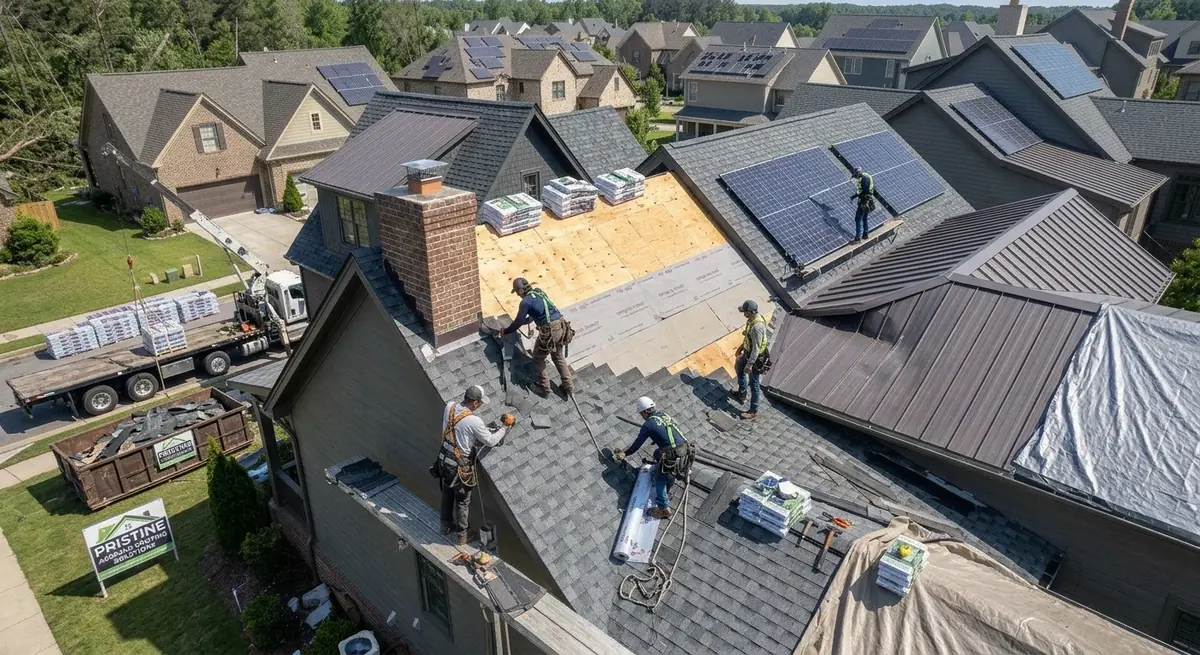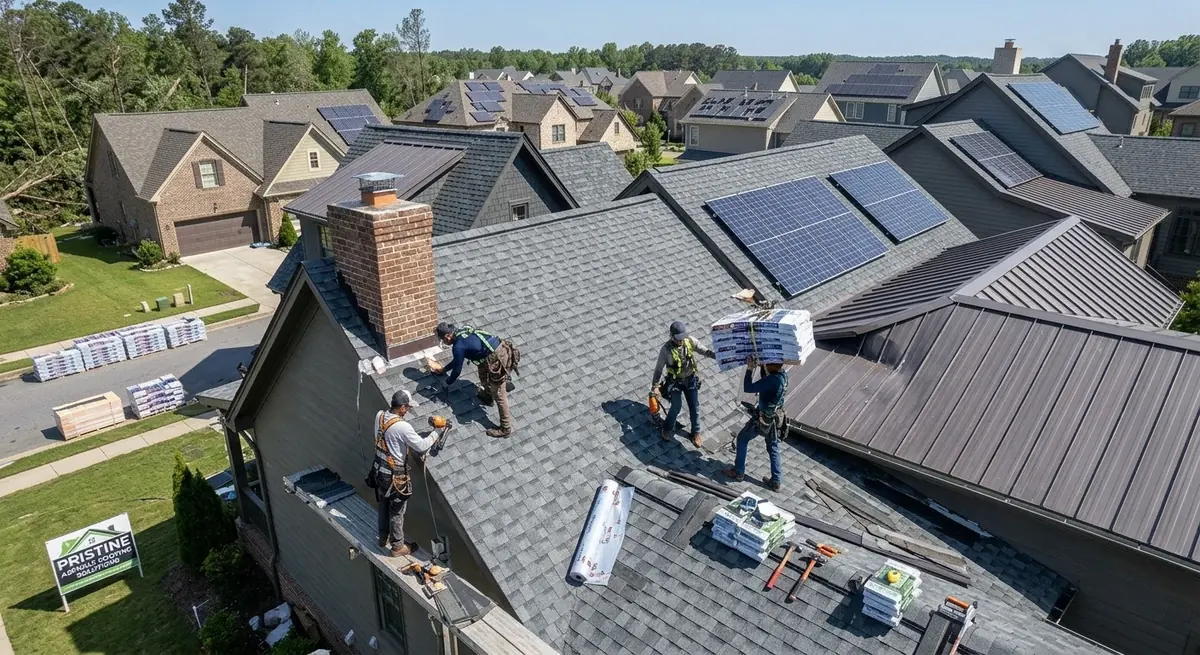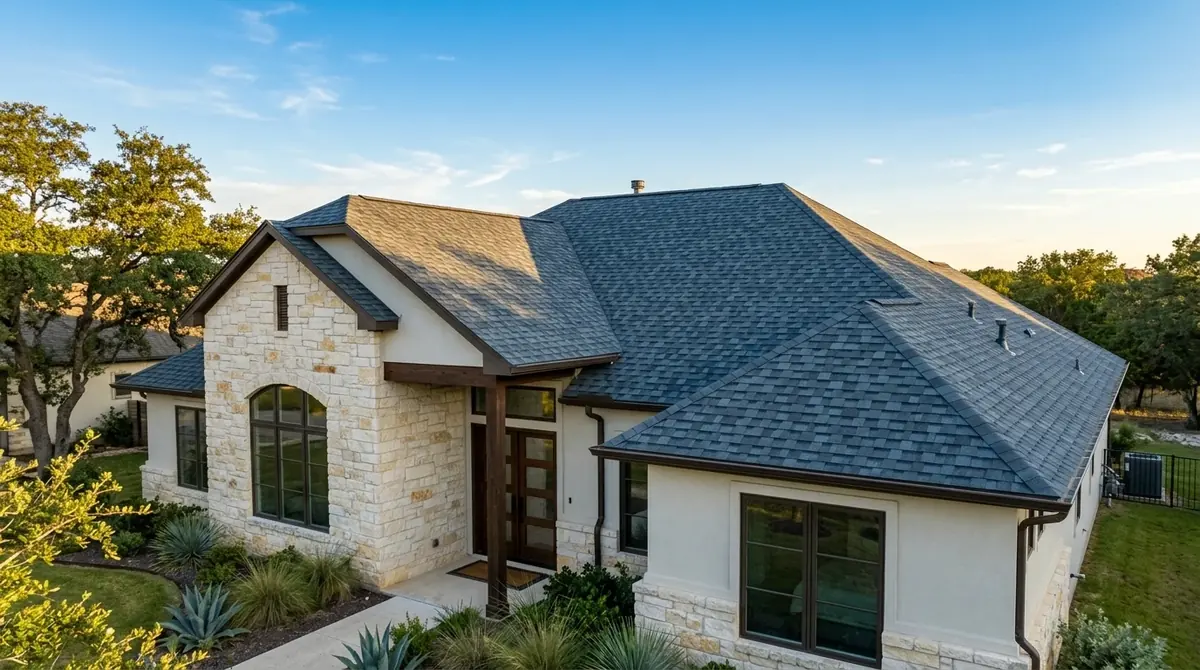
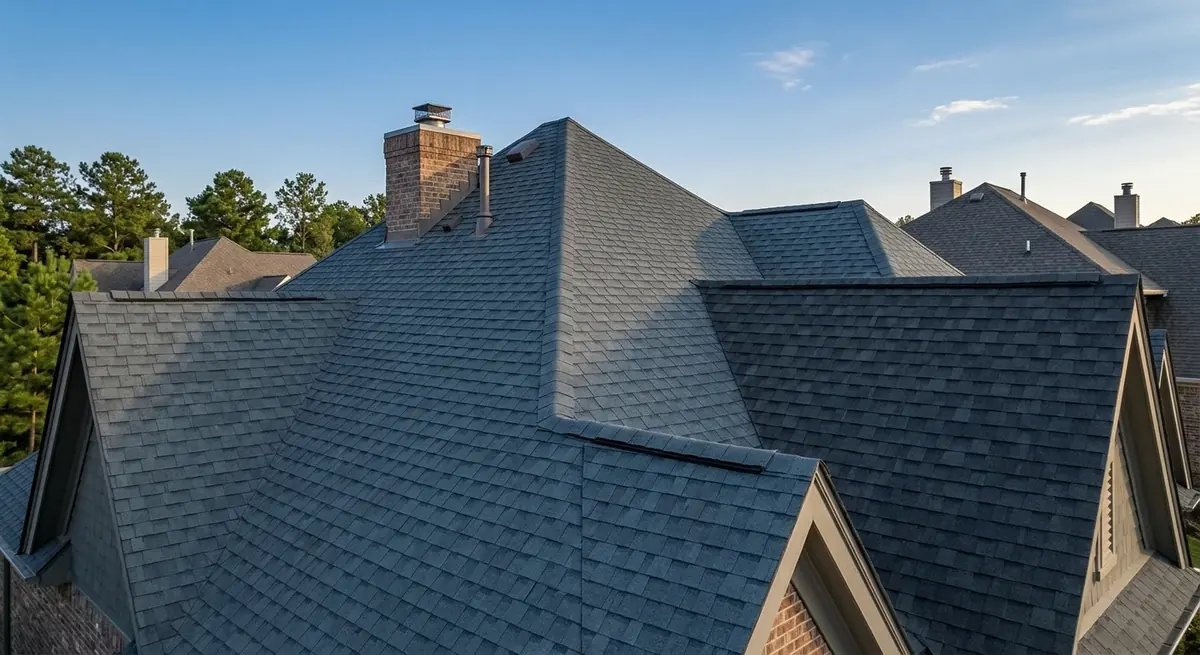
Few places in Texas understand wildfire risk like Bastrop County. The 2011 Bastrop County Complex Fire burned through a large part of the Lost Pines and destroyed more than a thousand homes, and it changed how many residents think about their property. Today, homeowners rebuilding, re-roofing, or buying in wooded areas often ask the same question: how can my roof help protect my home?
A roof is one of the most important parts of a home's fire resistance, because it is the largest surface exposed to wind-blown embers. This guide covers fire resistant roofing for Bastrop homeowners in practical terms: ratings, materials, and the smaller details that make a real difference.
How Embers Threaten a Home
During a wildfire, many homes are lost not because the flame front reaches them directly but because embers carried by wind land on or in the house. Embers can:
- Ignite dry pine needles and leaves in gutters and valleys.
- Get sucked into attic vents and ignite materials inside.
- Catch on combustible roofing or gaps at the roof edge.
That means fire resistance is about the whole roof system, not just the shingles or panels.
What a Class A Fire Rating Means
Roof coverings are tested and rated Class A, B, or C for fire resistance, with Class A being the highest. Class A roofs are tested to resist severe fire exposure from the outside. A few important points:
- Many common architectural asphalt shingles carry a Class A rating.
- Metal roofing is noncombustible and is typically Class A when installed over an approved underlayment or deck assembly.
- Some ratings depend on the full assembly, including underlayment, so installation details matter.
- Untreated wood shakes are generally a poor choice in high-risk areas.
Ask your roofer to confirm the fire rating of the specific product and assembly being installed.
Comparing Roofing Materials for Fire Resistance
| Material | Typical Fire Rating | Notes for Bastrop County |
|---|---|---|
| Standing seam metal | Class A (as an assembly) | Noncombustible; sheds needles easily; typically $10–$16 per sq ft installed |
| Exposed-fastener metal | Class A (as an assembly) | Lower cost metal option; typically $6–$10 per sq ft installed |
| Architectural asphalt shingles | Often Class A | Most affordable; typically $4.50–$7.00 per sq ft installed |
| Untreated wood shakes | Often unrated or low rated | Not recommended in wildfire-prone areas |
Costs are typical Central Texas planning ranges, not quotes; a real estimate requires an inspection. For deeper numbers, see our roof replacement cost guide or explore metal roofing in Bastrop.
Vents: The Often-Overlooked Weak Spot
Attic ventilation is essential in our Texas heat, but standard vents can let embers in. Ember-resistant options help:
Ridge and soffit vents
Ember-resistant vents use fine mesh or baffles designed to block or slow embers while still allowing airflow. Fine metal mesh (commonly 1/8 inch or smaller openings) is a frequent recommendation for wildfire areas.
Gable and turtle vents
Older vents with wide openings or deteriorated screens should be inspected. Replacing or retrofitting them during a re-roof is an efficient time to upgrade.
Gutters, Valleys, and Roof Edges
Pine needles collecting in gutters and valleys act like kindling right next to your roof. Fire-wise maintenance includes:
- Clearing gutters and valleys regularly, especially before dry, windy periods.
- Considering metal gutters and noncombustible gutter guards.
- Making sure drip edge and roof-to-wall flashing close gaps where embers could lodge.
- Keeping overhanging limbs trimmed well back from the roof.
Our post on pine needles on your roof covers debris management in more detail.
Beyond the Roof: The Home Ignition Zone
A roof works best as part of a larger plan. Fire safety guidance commonly recommends keeping the area immediately around the house, roughly the first five feet, free of combustible mulch, firewood, and dense vegetation. Decks, fences that attach to the house, and windows also matter. Local fire departments and the Texas A&M Forest Service publish helpful resources for homeowners in wildland areas.
When to Upgrade
If your roof is aging, damaged, or made of a lower-rated material, a replacement is the most efficient time to improve fire resistance. Vents, flashing, drip edge, and underlayment can all be upgraded at once. If your roof is in good shape, a roof inspection can identify smaller upgrades like vent screens and gutter changes.
A Fire-Ready Roof Checklist
Use this as a quick reference whether you are planning a new roof or maintaining the one you have:
- Confirm your roof covering is Class A rated as installed.
- Replace any damaged, cracked, or missing shingles or panels promptly.
- Close gaps at the ridge, eaves, and roof-to-wall joints where embers could lodge. Metal roofs should have properly fitted closures at panel ends.
- Screen or upgrade attic vents with fine metal mesh or ember-resistant designs.
- Clean gutters and valleys before dry, windy stretches, and after needles drop.
- Keep limbs trimmed well back from the roof and chimney.
- Check that chimney caps and spark arrestors are in place and in good condition.
- Move firewood and other combustibles away from the walls of the house.
Many of these items are inexpensive or free. Combined with a Class A roof, they give embers fewer places to catch. If your roof has hail or storm damage, repairing it quickly also matters, since broken shingles and lifted edges create more spots for embers to settle. Our roof repair service can handle those fixes.
Talk With a Local Roofer Who Knows the Lost Pines
Bastrop Roofing works on homes throughout the Lost Pines, from neighborhoods off SH 71 and SH 21 to rural properties near Paige, Smithville, and Cedar Creek. We can walk you through material options, vent upgrades, and maintenance in plain terms. When you want a Bastrop roofing team that understands local conditions, we are nearby.
Planning a re-roof or want to know how fire-ready your current roof is? Bastrop Roofing is here to help. Request a consultation or call (512) 297-7580.