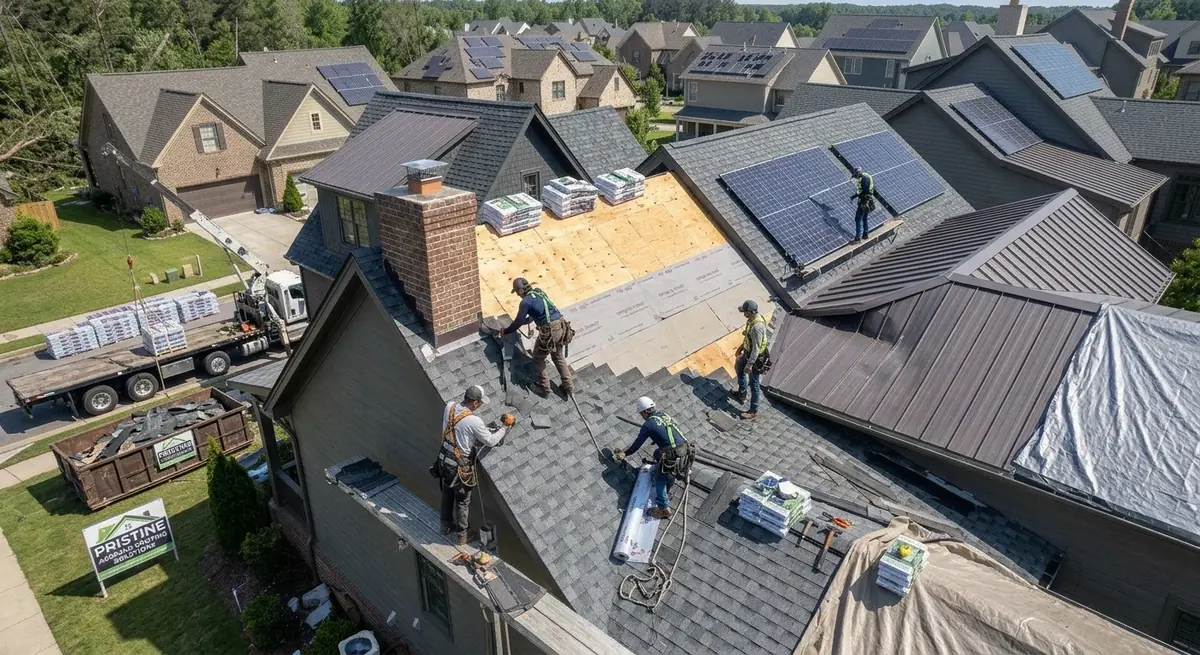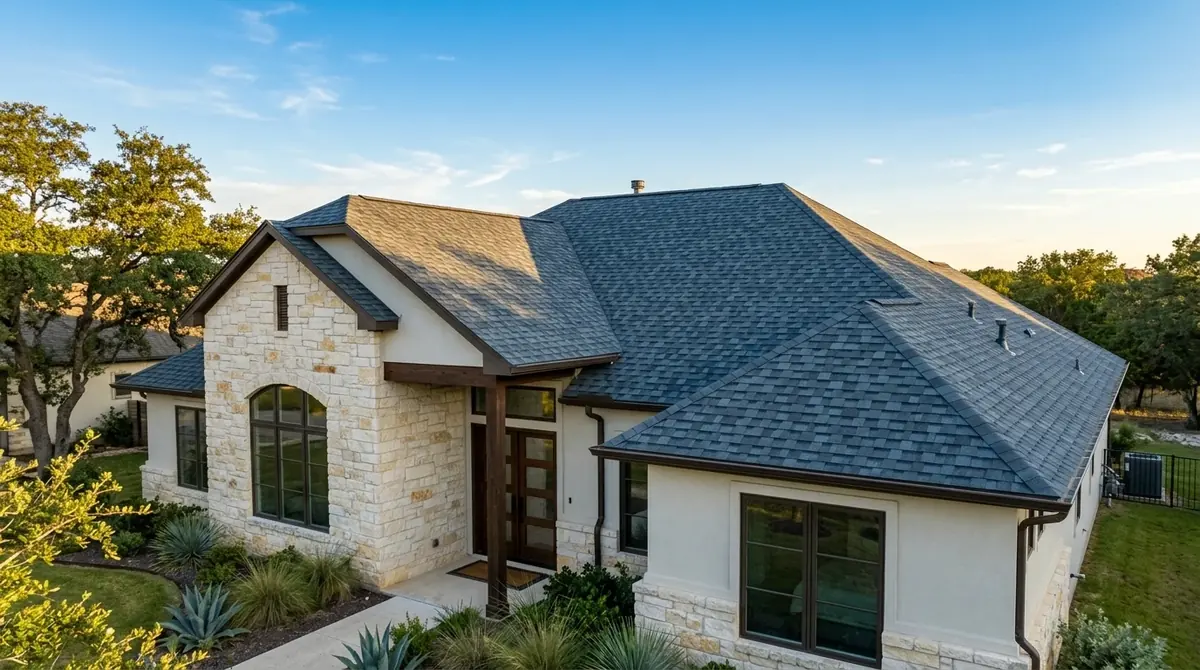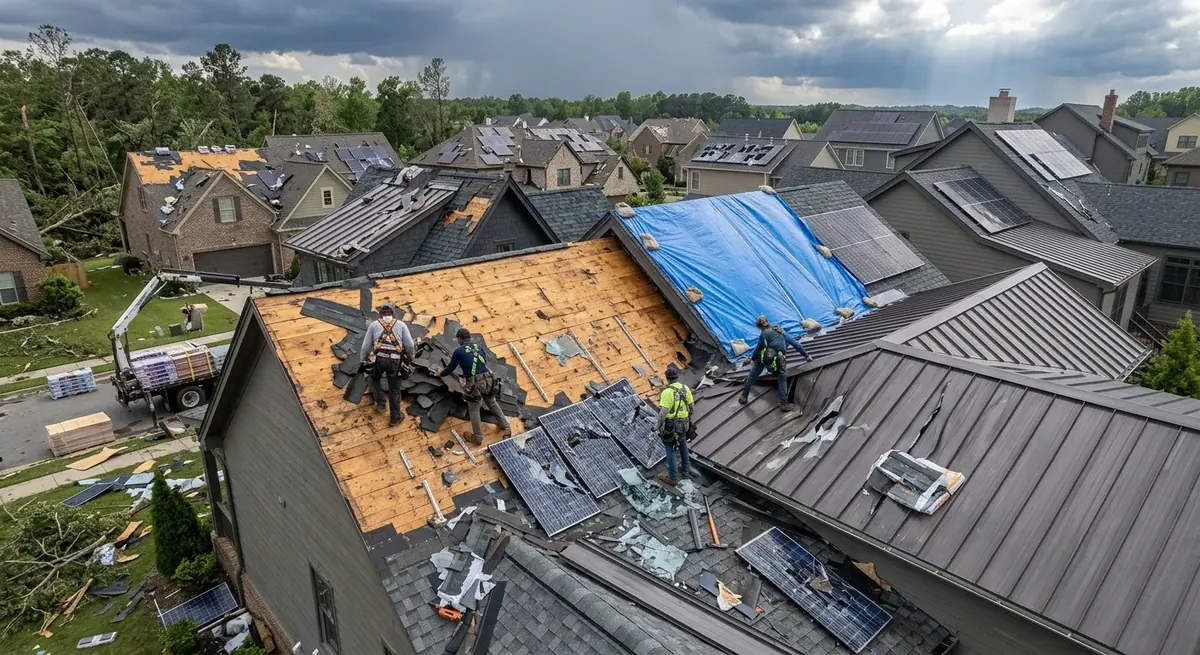
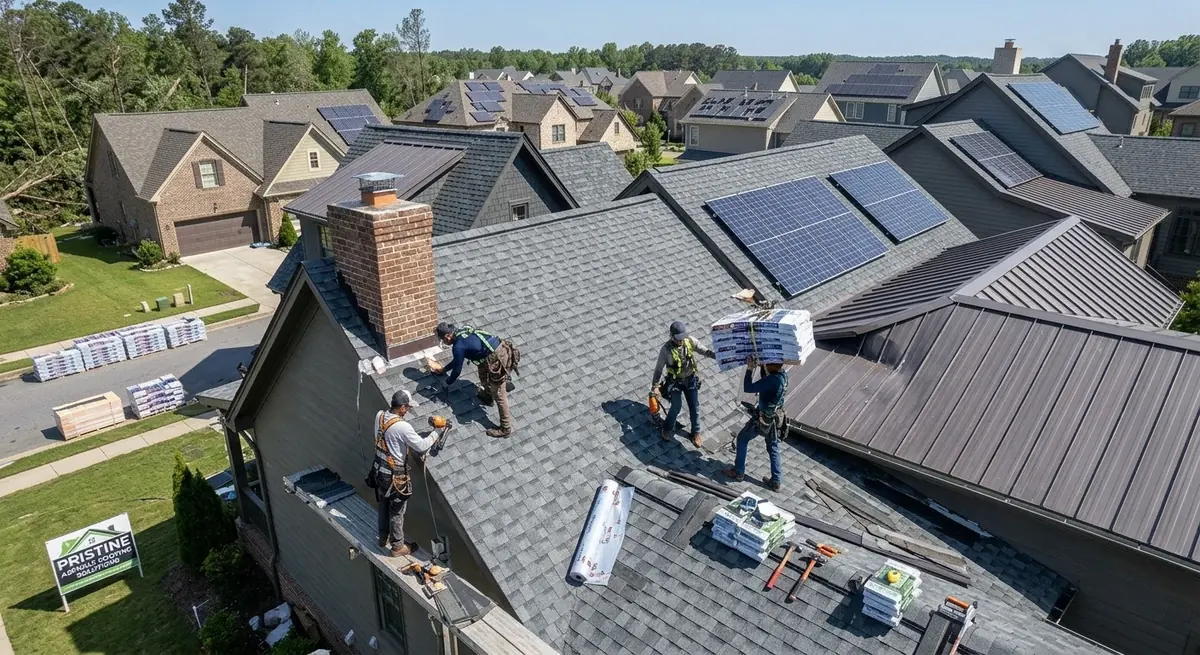
When it is time for a new roof, most Bastrop homeowners end up choosing between two options: architectural asphalt shingles or metal. Both can be good choices. The right one depends on your budget, how long you plan to stay in the home, the look you want, and how your property sits among the pines.
Interest in Bastrop metal roofing has grown in recent years, partly because of our summer heat and partly because of wildfire awareness in the Lost Pines. But shingles are still the most common roof on homes from Tahitian Village to Hunters Crossing for good reasons. Here is a plain comparison to help you decide.
Side-by-Side Comparison
| Factor | Architectural Shingles | Standing Seam Metal | Exposed-Fastener Metal |
|---|---|---|---|
| Typical installed cost (Central Texas) | $4.50 – $7.00 / sq ft | $10 – $16 / sq ft | $6 – $10 / sq ft |
| Typical lifespan | About 20 – 30 years | Often 40+ years | Often 30 – 40 years |
| Maintenance | Low; watch for granule loss and lifted tabs | Very low | Periodic fastener and washer checks |
| Fire rating | Many products rated Class A | Class A when installed over a rated assembly | Class A when installed over a rated assembly |
| Look | Traditional, many colors | Clean, modern lines | Rural, barn or ranch style |
Costs above are typical Central Texas planning ranges, not quotes. Every roof is different, and a real estimate requires an inspection. Lifespans also vary with installation quality, ventilation, and weather exposure.
Cost: Upfront vs. Long Term
Shingles win on upfront cost, usually by a wide margin. On a typical 2,500 square foot roof, architectural shingles might run roughly $11,000 to $17,500, while standing seam could be $25,000 to $40,000. Exposed-fastener metal falls in between.
The math changes if you plan to stay in your home for decades. A metal roof that lasts twice as long as shingles may cost less per year of service. Our metal roof vs. shingle calculator lets you plug in your roof size and timeline to compare. For broader numbers, see our guide to roof replacement cost in Bastrop.
Heat and Energy
Central Texas summers are hard on roofs. Shingles absorb heat, and years of high attic temperatures speed up aging. Metal, especially in lighter colors or with reflective coatings, reflects more sunlight and sheds heat quickly once the sun goes down. Many homeowners notice a cooler attic after switching, though actual energy savings depend on insulation, ventilation, and your HVAC system.
Proper attic ventilation matters for both materials. A well-ventilated shingle roof will outlast a poorly ventilated one by years.
Hail and Wind
Shingles
Hail can knock granules off shingles, bruise the mat, and shorten roof life even when no leak appears right away. Impact-resistant shingle lines are available and may qualify for insurance discounts with some carriers; ask your insurer.
Metal
Metal resists punctures well, but large hail can leave cosmetic dents, especially on thinner panels. Dents usually do not cause leaks, but some insurance policies exclude cosmetic damage to metal. Read your policy. For wind, both materials perform well when installed correctly; metal panels with concealed fasteners hold up especially well.
Pine Trees, Debris, and Fire
Many homes in the Lost Pines sit under tall loblolly pines. Needles collect in valleys and gutters, hold moisture, and can encourage algae on shingles. Metal sheds needles more easily, though valleys and gutters still need clearing. We cover this in detail in our post on pine needles on your roof.
Fire is also on many minds in Bastrop County. Both Class A shingles and metal can be part of a fire-resistant roof, but details like vents, gutters, and eave construction matter just as much.
Installation Details That Matter More Than the Material
A good shingle roof will outperform a poorly installed metal roof, and the reverse is also true. Whichever material you pick, ask about these details:
- Underlayment: Synthetic underlayment is common under both. Metal roofs in our heat benefit from a high-temperature underlayment rated for use under metal.
- Panel gauge and coating: For metal, thicker panels (a lower gauge number) resist dents better. Ask what paint system is used and what the fade and chalk terms are.
- Fasteners: Exposed-fastener metal relies on rubber washers that age in the sun. Expect to check and replace some screws over the life of the roof.
- Flashing and penetrations: Pipe boots, chimneys, and skylights are where most leaks start on either roof type. They should be flashed with materials compatible with the roof.
- Ventilation: Balanced intake and exhaust vents keep attic temperatures down and help any roof last longer.
Color, Curb Appeal, and HOA Rules
Shingles come in dozens of blends that suit brick and stone homes common around Bastrop. Metal has expanded its color range too, and standing seam in charcoal, bronze, or galvalume looks right on farmhouse and modern builds. Some subdivisions have HOA rules that limit roof material or color, so check your deed restrictions before you commit. If you live in a neighborhood with an architectural committee, get approval in writing before work is scheduled.
Which Should You Choose?
Shingles tend to make sense when:
- You want the lowest upfront cost.
- You may sell the home within 10 to 15 years.
- Neighborhood rules or HOA guidelines favor a traditional look.
Metal tends to make sense when:
- You plan to stay long term and want fewer replacements.
- You want better heat reflection and easier debris shedding.
- You like the look on a ranch, farmhouse, or modern home.
Learn more about our metal roofing installation and shingle roofing services.
Talk It Through With a Local Roofer
Bastrop Roofing installs both shingle and metal roofs, so we have no reason to push one over the other. We will look at your roof, your budget, and your goals and give you a straight recommendation. Homeowners across Bastrop, Paige, Smithville, and Cedar Creek rely on a local Bastrop roofing team that knows how our weather treats each material.
Want a side-by-side estimate for both? Bastrop Roofing can price each option after one inspection. Contact us online or call (512) 297-7580.