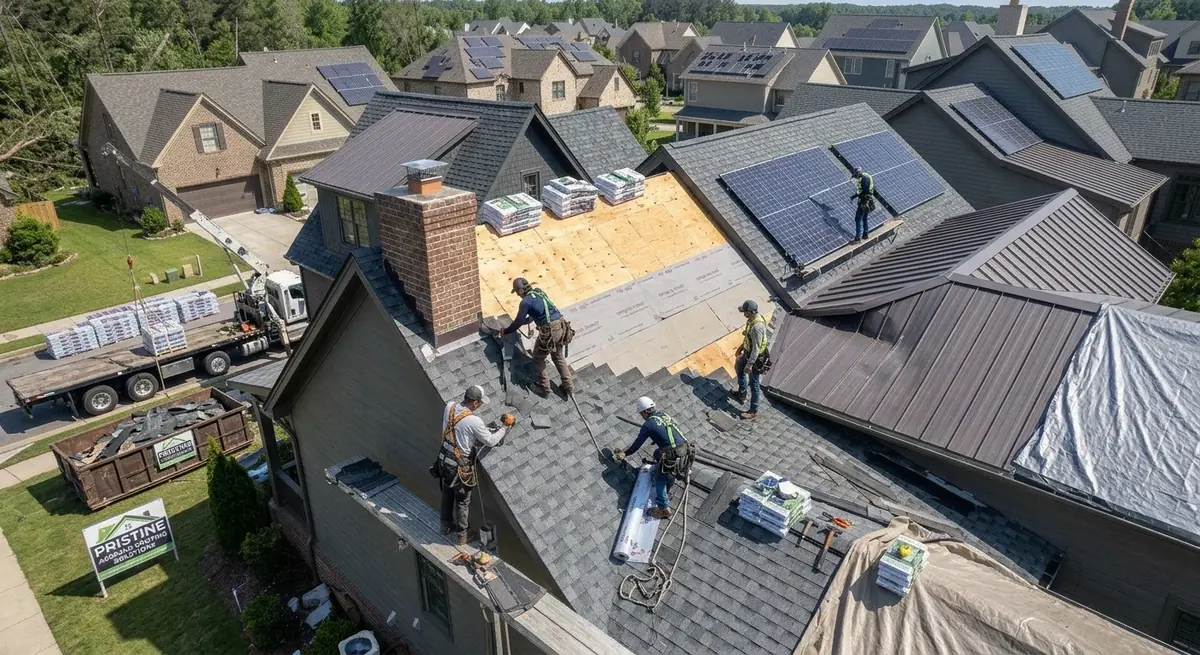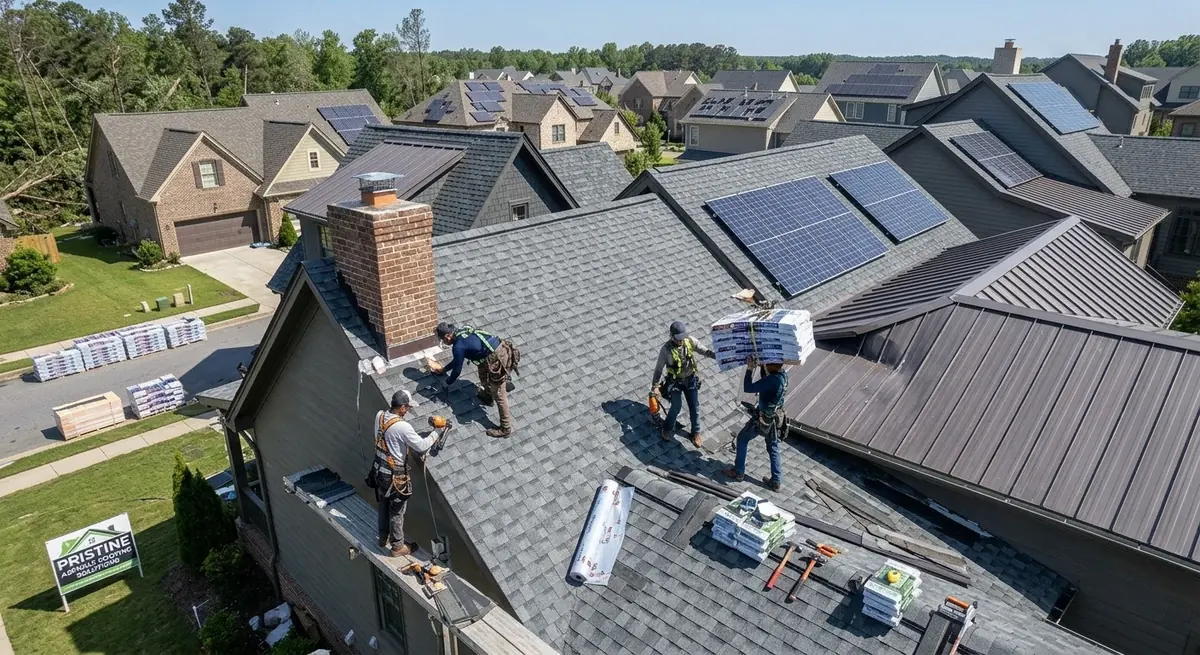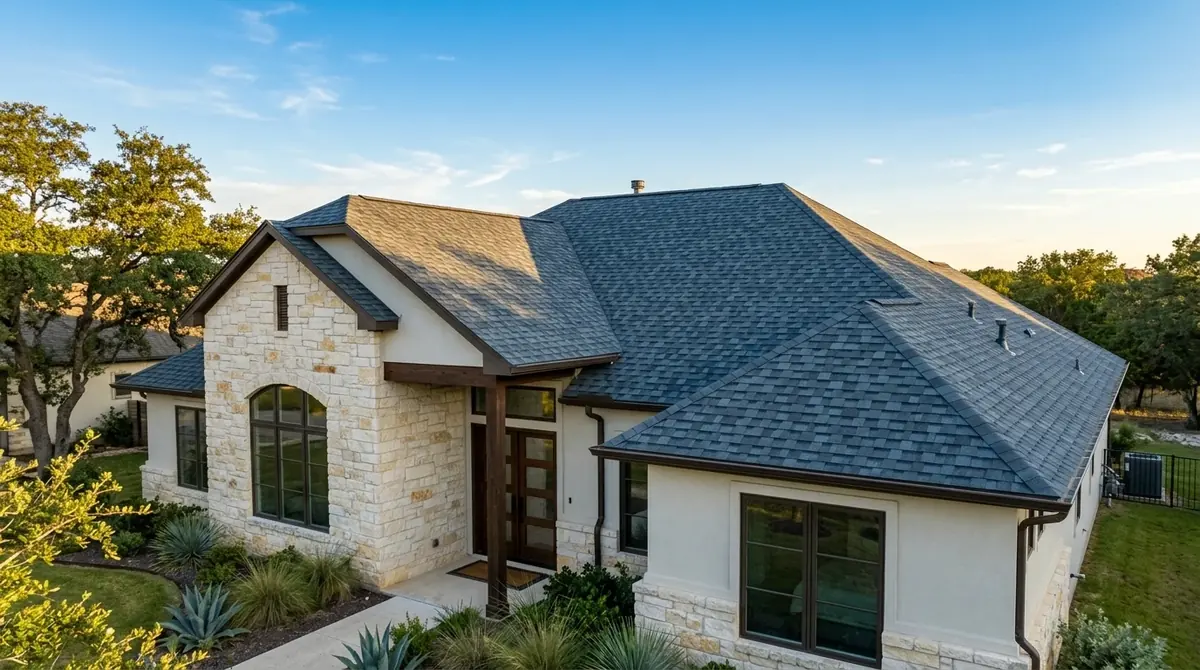
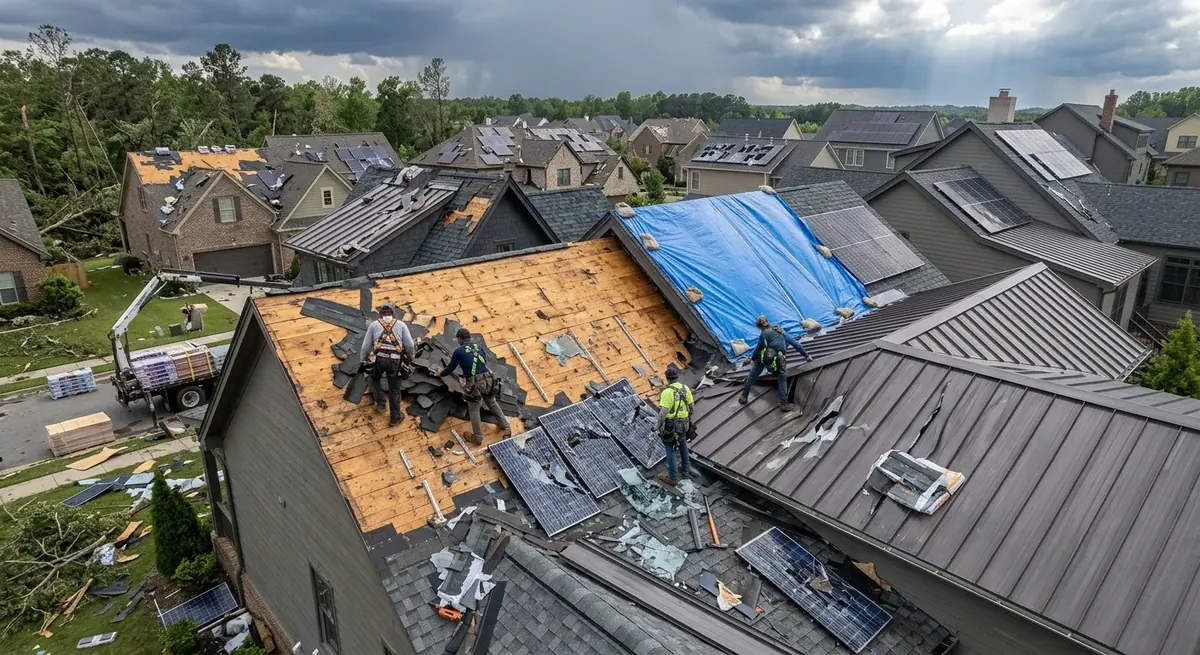
Spring and early summer storms can roll across Central Texas fast, and hail is one of the most common reasons Bastrop County homeowners end up needing roof work. The tricky part is that hail damage is not always obvious from the ground. A roof can look fine from the driveway and still have bruised shingles that will leak or wear out years early.
If you think you have a hail damage roof in Bastrop, here is a practical, step-by-step guide to what to do, what to look for, and how the insurance process generally works.
Step 1: Stay Safe and Stop Active Leaks
Right after a storm, do not climb on a wet roof. Instead:
- Check ceilings and the attic for drips or water stains.
- Move belongings away from leaks and put out buckets or towels.
- Watch for downed power lines and broken limbs, especially on wooded lots.
- If water is coming in, call for an emergency roof repair or tarp to prevent further damage.
Most policies expect homeowners to take reasonable steps to prevent additional damage, so temporary protection is usually a smart move. Keep receipts.
Step 2: Look for Signs of Hail Damage
You can spot many clues from the ground or a ladder without walking the roof.
Ground-level clues
- Dents on gutters, downspouts, and metal vents.
- Dings on your mailbox, car, patio furniture, or AC unit fins.
- Shingle granules collecting at downspout outlets.
- Damaged window screens or siding.
On the roof (best left to a pro)
- Dark spots where granules have been knocked loose.
- Soft, bruised areas that feel spongy under pressure.
- Cracked or split shingles.
- Dents on metal roof panels, flashing, or ridge caps.
Our storm damage checklist is a handy printable list to work through.
Step 3: Document Everything
Good documentation helps any claim. Before cleanup or permanent repairs:
- Note the date and approximate time of the storm.
- Take dated photos and video of exterior damage, including gutters, vents, and siding.
- Photograph any interior leaks or stains.
- If safe, photograph hailstones next to a coin or ruler for size.
- Save receipts for tarps, emergency repairs, or other expenses.
Step 4: Get a Professional Roof Inspection
A roofer can get up close and tell you whether you are looking at true functional damage or just cosmetic marks. They should provide photos and a written summary. Many homeowners prefer to have a roofer inspect before filing a claim so they know whether damage is likely to exceed their deductible.
Bastrop Roofing provides hail damage roof repair and inspections throughout Bastrop County. We will show you exactly what we find.
Step 5: Contact Your Insurance Company
Every policy is different, so the steps below are general guidance, not legal or insurance advice:
- Call your insurer or agent to report the damage and ask about your coverage and deductible.
- Ask whether your policy pays replacement cost or actual cash value on the roof.
- Ask about any time limits for filing a claim. Many policies have them.
- Schedule the adjuster inspection. You can ask your roofer to be present if you want a second set of eyes.
- Get the adjuster's estimate in writing and review it carefully.
Some policies have separate wind and hail deductibles, often a percentage of your home's insured value. Cosmetic damage exclusions are also common, especially for metal roofs. Read your policy or ask your agent.
What Hail Damage Looks Like on Different Roofs
| Roof Type | Common Hail Damage | Why It Matters |
|---|---|---|
| Asphalt shingles | Granule loss, bruising, cracks | Exposed mat ages faster and can leak |
| Metal roofing | Dents, chipped coatings | Often cosmetic, but seams and fasteners should be checked |
| Flat or low-slope | Punctures, membrane bruising | Can allow water intrusion that spreads under the membrane |
Common Mistakes to Avoid After a Hailstorm
A few missteps can make the process harder than it needs to be:
- Waiting too long. Small hail damage may not leak right away, but bruised shingles can fail months later, when it is harder to tie the damage to a specific storm.
- Climbing the roof yourself. Wet or granule-covered shingles are slippery, and walking on damaged shingles can make things worse.
- Making permanent repairs before documenting. Temporary tarping is fine, but take photos first and keep the damaged materials if you can.
- Assuming no leak means no damage. Functional hail damage often shows up as shortened roof life rather than an immediate drip.
- Signing paperwork you do not understand. Read every contract or authorization and ask questions before signing.
- Forgetting the rest of the property. Fences, sheds, outdoor AC units, skylights, and vehicles may also be damaged and worth noting.
If several storms hit in one season, keep separate notes and photos for each date. That makes it easier for you, your roofer, and your insurer to sort out what happened when.
Beware of Storm Chasers
After a big hailstorm, out-of-town crews often show up within days. Be careful with anyone who pressures you to sign immediately, offers to cover your deductible, or wants payment before work starts. See our guide on how to choose a roofer in Bastrop for questions to ask.
Repair or Full Replacement?
Light, isolated hail damage can sometimes be repaired. Widespread damage across multiple slopes usually calls for replacement, especially on an older roof. If you are replacing anyway, it may be worth looking at impact-resistant shingles or metal; ask your insurer whether either affects your premium. Our storm damage roof repair page explains the options.
Get Help From a Local Team
Hail damage is easier to deal with when you have someone local in your corner. Whether you are in Bastrop, Elgin, Smithville, or Cedar Creek, our Bastrop roofing crew can inspect your roof, document the damage, and help you understand your options.
Think your roof took a hit? Bastrop Roofing offers free storm damage inspections. Schedule an inspection or call (512) 297-7580.